Whoop structure
Ducts and prop guards make close-range flying more approachable. They protect the props, reduce the risk of light bumps, and help pilots fly near gates, furniture, tree gaps, and small backyard lines with more confidence.
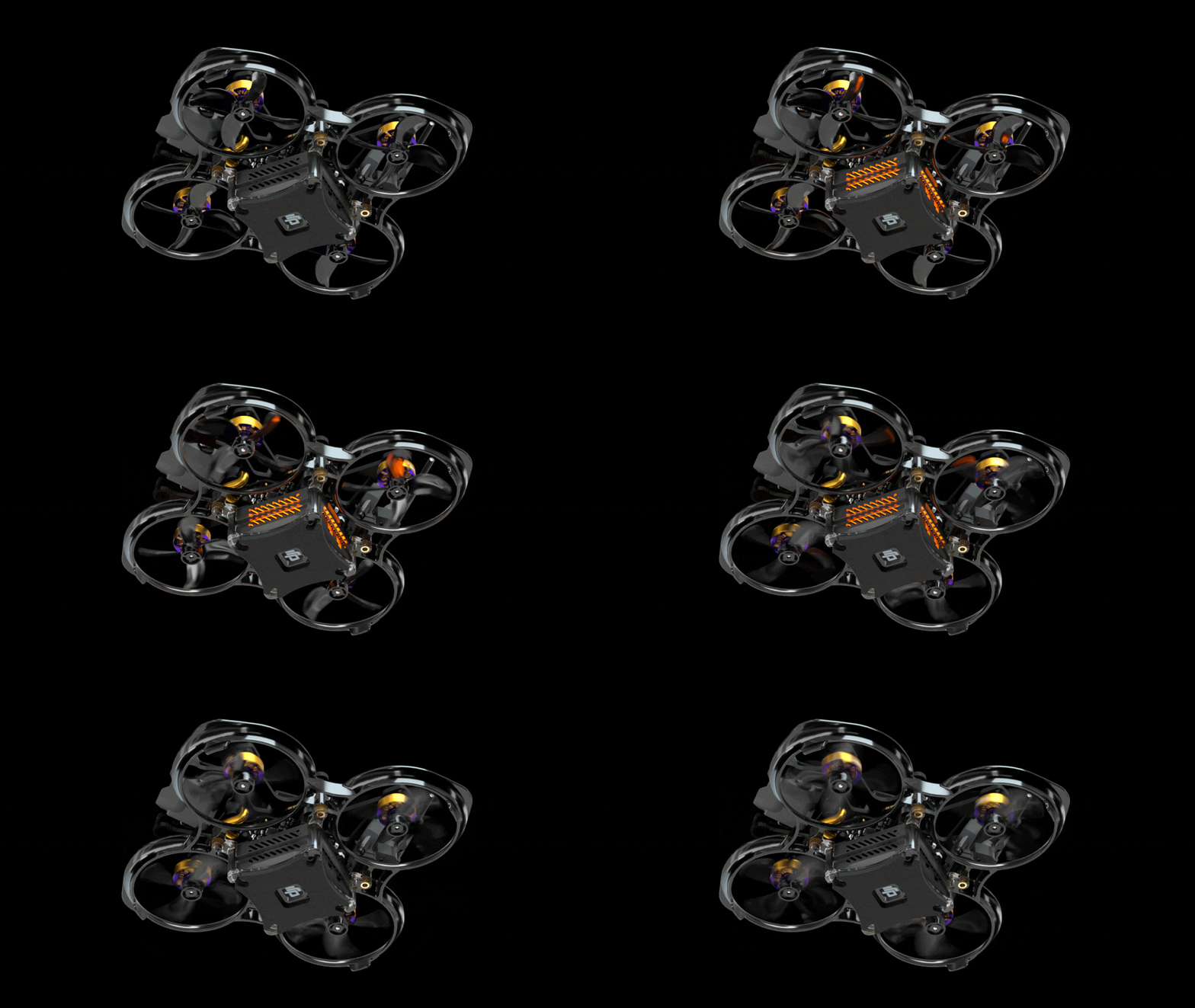
For protected HD FPV, a DJI O4 whoop has to carry O4 video hardware, prop guards, camera protection, damping, and a battery while staying smooth at low speed. That is why Flywoo's DJI O4 whoop direction is 2S. In this guide, 1S is only used as a general ultralight micro-FPV comparison point.
A 1S setup works well when a micro drone is built around minimum weight. A ducted DJI O4 whoop benefits from 2S because it must support the O4 video system, prop guards, camera protection, vibration control, battery weight, and stable low-speed flight. The goal is not just more speed. The goal is smoother control, better recovery, and a more practical HD FPV experience.
A whoop usually means a small FPV drone with prop guards or ducts. A DJI O4 whoop adds digital HD video, a more demanding camera system, and extra mounting considerations. That makes it different from a simple 1S ultralight open-frame build.
Ducts and prop guards make close-range flying more approachable. They protect the props, reduce the risk of light bumps, and help pilots fly near gates, furniture, tree gaps, and small backyard lines with more confidence.
DJI O4 adds the camera, transmission module, antenna, wiring, onboard recording, heat considerations, and a mounting path that must control vibration before the footage reaches stabilization.
Flywoo's DJI O4 whoop direction is represented by Flylens 75 and Flylens 85, both built around 2S. In this article, 1S is discussed as a general ultralight micro-FPV design choice, not as a Flywoo O4 whoop option.
1S power is not weak or outdated. It is simply better suited to a different design target: the lightest possible aircraft, fast response, simple close-range flying, and tight spaces where every gram changes the feel.
Very small frames, lighter open-prop builds, lower takeoff weight, simple indoor practice, and pilots who value agility and compact size most.
minimum weighttiny size
On an ultralight aircraft, less battery and less frame structure can make throttle response feel quick and direct. That is why many classic tiny whoops and toothpick-style builds stay with 1S.
When ducts, O4 video hardware, camera protection, and damping are added, the platform is no longer only chasing the lowest possible weight. That is where 2S starts to make more design sense.
DJI O4 brings HD video quality into very small aircraft, but it also changes the engineering problem. The drone must carry the camera system properly, protect the lens, handle heat and airflow, control vibration, and keep enough power reserve for predictable low-speed movement.
| Design factor | Why it matters on an O4 whoop | Why 2S helps |
|---|---|---|
| O4 video hardware | The air unit, camera, antenna, wiring, and onboard recording add weight and mounting demands. | Extra voltage headroom helps the drone carry the HD system without feeling underpowered. |
| Ducted guards | Ducts improve prop protection, but they add structure, drag, and a different throttle response. | More power reserve helps the whoop stay controlled after turns, bumps, and slow push-through shots. |
| Camera damping | Small HD drones are sensitive to motor vibration, prop condition, duct resonance, and camera mount stiffness. | A stable power system gives the damping structure a better chance to keep footage clean and predictable. |
| Battery choice | More capacity can help flight time, but more battery weight can change handling quickly. | 2S gives practical headroom, but flight time still depends on battery health, throttle style, and total weight. |
Ducts are one reason people choose whoops in the first place. They help with prop protection, safer close-range practice, indoor confidence, and smoother low-speed lines. They also add frame weight and drag, which is why a ducted O4 whoop benefits from more usable power than a bare ultralight open-frame drone.
Ducted prop guards help pilots fly near obstacles with more confidence. They fit indoor practice, backyard cruising, small parks, travel clips, and cinematic push-through shots where prop protection matters.
Ducts add structure around the airflow path. A ducted O4 whoop must carry that structure, the O4 system, and a battery while still staying smooth enough for HD footage. 2S gives the platform more room to do that.
2S does not automatically make a whoop better. It gives an O4 whoop more usable power reserve so the aircraft can carry the video system, ducts, and battery while remaining smoother and more predictable in smaller flying spaces.
More voltage headroom can make it easier for the aircraft to recover after turns, throttle changes, and small mistakes, especially when ducts and O4 hardware increase the load.
For close-range HD FPV, the valuable feeling is not only top speed. It is smooth throttle control, stable low-speed movement, and enough reserve to keep the drone from feeling strained.
2S does not guarantee longer flight time, better footage, or no jello. Battery choice, prop condition, tune, damping, wind, and flying style still decide the result.
Flywoo's Flylens 75 and Flylens 85 O4 whoops combine duct protection, DJI O4 video, camera mounting, and 2S power headroom for close-range HD FPV. The technical baseline comes from DJI O4 specifications, while the product context stays focused on these two Flywoo aircraft.
Flylens 75 is the tighter 75 mm 2S O4 whoop choice. It fits pilots who want a compact protected aircraft for indoor practice, casual close-range HD FPV, and small-space flight lines.
75 mm2S O4 whoop
Flylens 85 is the roomier 85 mm 2S O4 whoop choice. It gives pilots more aircraft around the O4 system for backyard lines, small parks, calm outdoor cruising, and steadier protected HD FPV.
85 mmlarger whoop
A ducted O4 whoop asks the power system to support more than hover thrust. It needs enough reserve for guarded props, camera protection, low-speed control, and smooth recovery after turns.
ducted controlpower reserve
Both Flywoo O4 whoop choices are 2S, ducted, and built around protected HD FPV. The decision is mainly about size, space, battery fit, and the style of flying you expect to do most often.
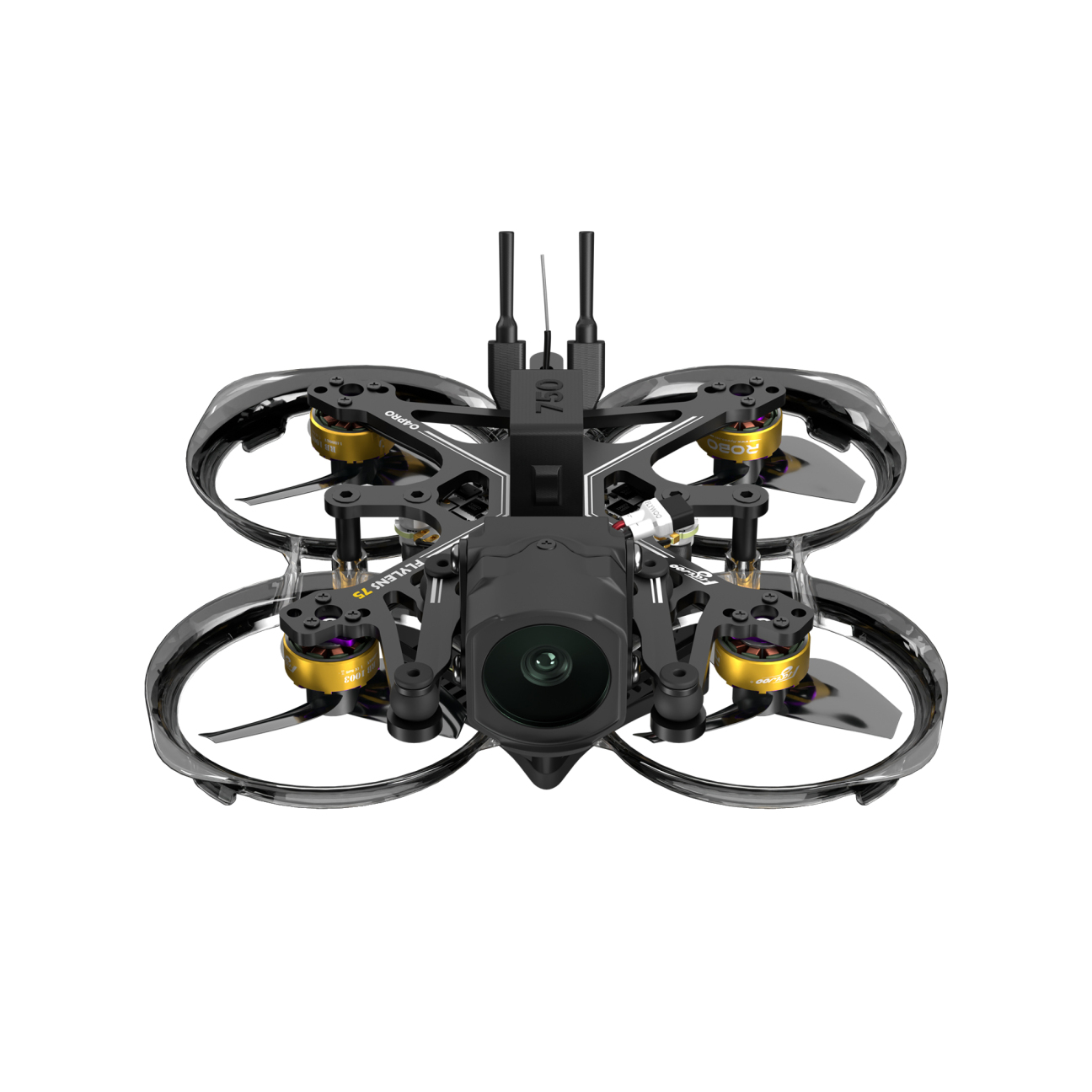
Flylens 75 is the compact choice for indoor practice, tighter home or office lines, travel clips, and pilots who want the smaller protected O4 whoop in the Flylens family.
75 mm wheelbase2S 550-1000mAh fitO4 PRO / O4 Wide
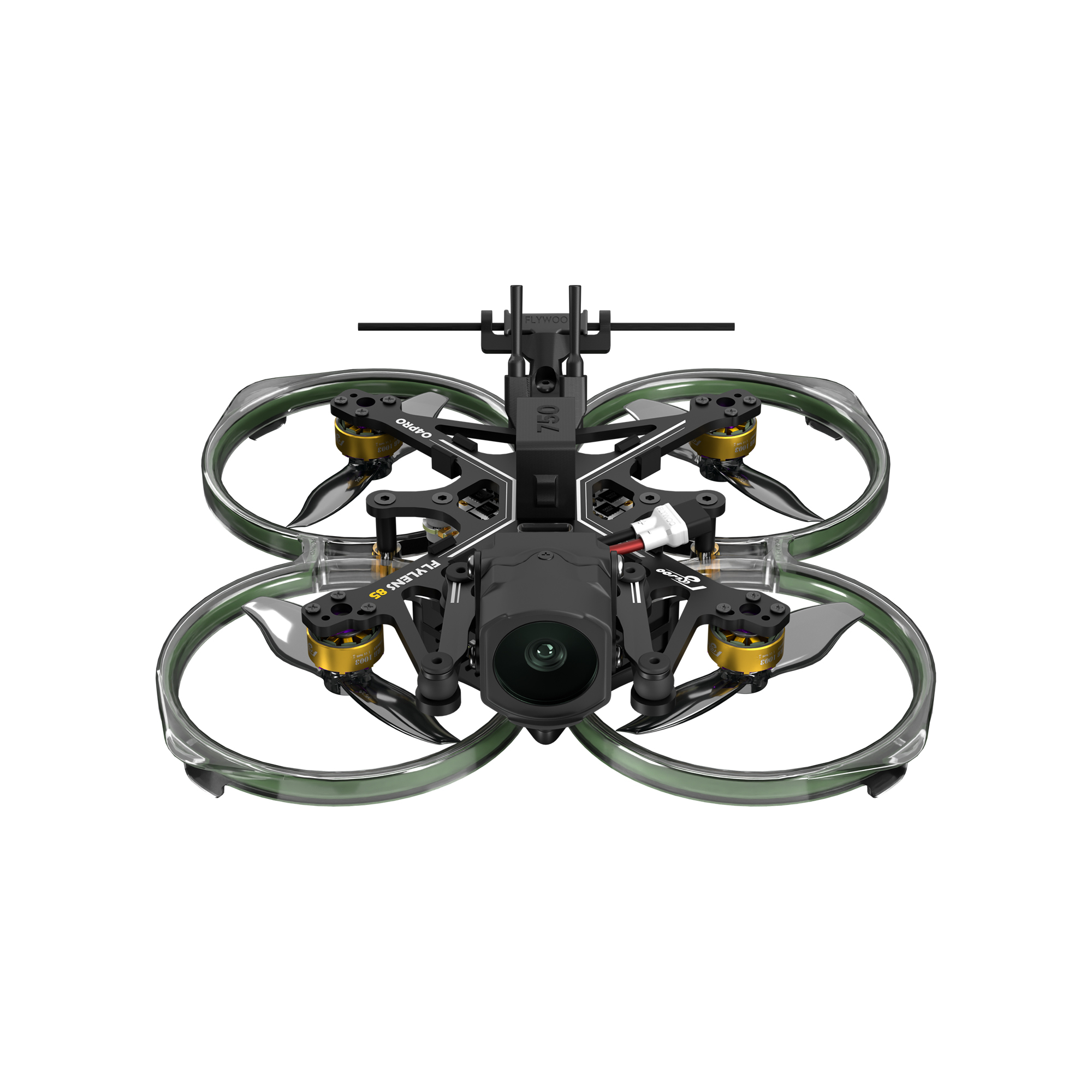
Flylens 85 is the larger choice for pilots who want more room around the O4 system, larger battery options, backyard lines, small parks, and a calmer protected HD FPV feel.
85 mm wheelbase2S 750-1000mAh fitO4 PRO / O4 Wide
| Flywoo model | Best fit | O4 options | Battery direction | Flight-time context |
|---|---|---|---|---|
| Flylens 75 2S O4 | Tighter indoor practice, compact travel clips, small-space protected HD FPV. | O4 PRO camera or Flywoo O4 Wide camera, depending on version. | 2S 550-1000mAh, version and mount dependent. | Compact builds favor agility; real time changes with battery size, props, tune, and throttle style. |
| Flylens 85 2S O4 | Indoor-to-outdoor flying, backyard lines, calm small-park cruising, steadier low-speed HD FPV. | O4 PRO camera or Flywoo O4 Wide camera, depending on version. | 2S 750-1000mAh, version and mount dependent. | The larger platform gives more room for battery choice; real time still depends on setup and flying style. |
Flylens 75 and Flylens 85 solve the same protected-FPV problem at two sizes. The 75 mm platform is the tighter, more packable whoop; the 85 mm platform gives more room for calmer cruising, larger 2S packs, and steadier outdoor lines.
This Flylens 75 flight video is useful for understanding the smaller 75 mm platform: tighter ducts, a compact footprint, and a more travel-friendly protected whoop feel. For the current O4 version, the same size logic applies, with DJI O4 hardware adding more reason to use 2S headroom.
This Flylens 85 O4 Pro video shows the larger 85 mm Flylens direction: more physical room around the O4 system, steadier cruising, and a more relaxed feel in backyard, park, and larger indoor spaces.
Use it to understand the smaller Flylens platform behavior: easier packing, tighter indoor lines, and quicker reactions in small spaces. It is a model-platform reference, while this article focuses on the current Flywoo 2S O4 whoop direction.
Use it to understand why the 85 mm platform feels calmer: more disk area, a larger ducted footprint, and more room for the O4 camera system and 2S battery choices.
Neither video means 2S automatically gives longer flight time or perfect footage. The correct takeaway is narrower: 2S gives protected O4 whoops more usable room for ducts, O4 hardware, damping, and real-world control.
For pilots comparing cinematic cruising with harder flying, this Flylens 85 video adds more context on how the larger Flylens platform behaves beyond slow indoor lines.
For Flywoo whoop buyers, the practical point is simple: Flylens 75 and Flylens 85 use 2S because these aircraft are built around duct protection, O4 video, camera mounting, and stable close-range HD FPV. The 1S discussion in this guide explains the broader ultralight micro-FPV category, not a Flywoo O4 whoop alternative.
Choose Flylens 75 when the goal is a tighter protected O4 whoop. Choose Flylens 85 when the goal is a roomier protected O4 whoop for backyard lines, small parks, and steadier low-speed cruising.
protected HD FPV2S headroomducted whoop
A 1S ultralight build can be excellent when minimum weight is the main goal, but a ducted DJI O4 whoop carries more structure and video hardware. That is why 2S is the more practical Flywoo whoop direction.
not a 1S whoopO4 carrying load
When this article mentions 1S, it refers to the broader ultralight micro-FPV category: very small aircraft, lighter open-frame builds, and pilots who prioritize weight and agility over duct protection.
general categoryultralight micro FPV
The right choice depends on the job. A 2S O4 whoop is attractive when the pilot wants duct protection and DJI O4 image quality in one compact aircraft. A 1S ultralight is still the cleaner choice when the pilot wants the smallest, lightest, simplest micro drone.
Protected HD FPV, indoor practice, backyard lines, small parks, travel clips, smoother low-speed cruising, and pilots who want DJI O4 video without moving into a larger cinewhoop.
protected HDclose range
More usable power headroom than 1S, better support for ducted guards, more comfortable O4 carrying capacity, smoother recovery after turns, and a stronger fit for low-speed cinematic flying.
2S headroomduct support
Skip it if minimum weight, ultra-tight indoor racing, analog-level lightness, or the smallest possible aircraft matters more than O4 video and duct protection. 2S also adds battery cost, charging considerations, and weight planning.
not the lightestbattery planning
The better question is not whether 2S is always better than 1S. The better question is what the aircraft needs to carry, where it will fly, and how smooth the pilot wants the HD footage to feel.
| Use case | Better fit | Why | What to check before buying |
|---|---|---|---|
| Smallest possible micro drone | 1S ultralight | Lower weight and simpler power needs matter more than ducted O4 headroom. | Camera system, prop size, weight, battery connector, and indoor space. |
| Ducted HD close-range flying | 2S O4 whoop | Ducts, O4 video hardware, camera protection, and damping benefit from more usable headroom. | Battery fit, total weight, duct durability, camera damping, and prop condition. |
| Beginner-friendly practice | 2S O4 whoop, with practice | Prop guards and stable low-speed control help, but manual FPV still requires training. | Simulator time, safe flight area, throttle limit, angle mode, and battery habits. |
| Tight indoor racing | Usually 1S or analog whoop | Very low weight and fast response can matter more than HD recording. | Local race rules, prop size, latency preference, and crash durability. |
| Outdoor calm-day cruising | 2S O4 whoop or larger micro | More headroom helps with wind, turns, and carrying O4 hardware. | Wind, route, battery health, return margin, and signal environment. |
Two pilots can fly the same O4 whoop and get different results. Smooth cruising, clean props, calm air, healthy batteries, and a balanced camera mount usually create a better experience. Aggressive throttle use, damaged props, heavy batteries, or windy conditions can reduce both flight time and footage quality.
Capacity, cell health, connector resistance, voltage sag, and takeoff weight all change flight feel. A larger battery is not automatically better if it makes the whoop heavy or sluggish.
Prop condition, duct condition, motor health, frame flex, camera mount stiffness, and battery placement can all affect vibration and low-speed control.
Wind, temperature, flight mode, throttle style, tune, stabilization workflow, and pilot smoothness decide whether the O4 whoop feels relaxed or strained.
DJI O4 whoops use 2S instead of 1S because they solve a different problem from ultralight tiny drones. A 1S platform is excellent when minimum weight and agility matter most. A 2S O4 whoop makes more sense when the goal is protected HD FPV, smoother flight feel, better power headroom, and more stable close-range footage.
2S is not just about speed. For an O4 whoop, 2S gives the platform enough room to carry the camera system, ducted guards, battery, and damping structure while still feeling practical in real-world flying.
2S O4 whoops are best for pilots who want DJI O4 video in a protected micro platform for indoor practice, backyard lines, travel clips, small parks, and smoother low-speed HD FPV.
Skip a 2S O4 whoop if your top priority is the lightest possible micro drone, the smallest possible indoor racer, or a simple 1S ultralight setup.
Flylens 75 is the compact choice for tighter rooms and travel kits. Flylens 85 is the roomier choice for backyard lines, small parks, and pilots who want a calmer protected HD FPV feel.
Pick Flylens 75 when you want the smaller protected O4 whoop for apartments, tight indoor practice, travel clips, and compact carry setups.
Pick Flylens 85 when you want a steadier protected O4 whoop for larger indoor spaces, backyard lines, small parks, and calmer 2S cruising.
2S DJI O4 whoops are better for protected HD FPV because they have more power headroom for the O4 video system, ducted prop guards, camera protection, battery, and damping structure while staying stable in real-world flight.
No. 2S is not always better. 1S is better for ultralight tiny drones where minimum weight and agility matter most, while 2S makes more sense for ducted O4 whoops that need more power reserve and stability.
No. In this article, Flywoo DJI O4 whoop refers to the 2S Flylens-style platform. 1S is discussed only as a general ultralight micro-FPV category for pilots comparing design logic.
Choose Flylens 75 when the priority is the tighter, lighter protected O4 whoop for indoor practice and small spaces. Choose Flylens 85 when you want more room for larger battery options, outdoor calm-day lines, and a steadier protected HD FPV feel.
They can be beginner-friendly because they combine prop guards, stable low-speed control, and DJI O4 video. Manual FPV still requires simulator practice, safe flying habits, and careful battery management.
Not automatically. Flight time depends on battery size, battery condition, flying style, wind, temperature, takeoff weight, prop condition, and tune.
Choose 1S if you want minimum weight and ultralight agility. Choose 2S if you want ducted prop guards, DJI O4 video, more stability, and better power headroom for close-range HD FPV.
If you are choosing between 1S, 2S, 3S and 4S micro FPV drones, start with our micro FPV drone selection framework before comparing individual DJI O4 whoop builds.
Jun 21,2026 | FLYWOO