• English
  • United States(USD $)
Cart
Best DJI O4 FPV Drone for Beginners (2026 Guide)
Flywoo beginner FPV guide

Best DJI O4 FPV Drone for Beginners: Whoop, Toothpick, or Long Range?

For most new FPV pilots, the best DJI O4 FPV drone for beginners is a protected whoop. A whoop is easier to practice with because the prop guards make close-range flying more forgiving. A toothpick is better when you want the lightest possible digital FPV setup, while long range is best saved for pilots who already understand batteries, GPS rescue, failsafe behavior and local flight rules.

Beginner DJI O4 FPV Whoop vs toothpick Sub-250g long range Flylens / Firefly / Explorer
Quick answer

The safest beginner DJI O4 choice is a whoop; the lightest is a toothpick; the longest flight is long range.

Choose a DJI O4 whoop if this is your first real FPV drone and you want to practice indoors, in a backyard or around small obstacles. Choose a DJI O4 toothpick if you already have open outdoor space and want the smallest, lightest digital FPV aircraft. Choose a sub-250g long-range FPV drone if your goal is calm cruising, travel footage and endurance, but treat it as a careful second step rather than a crash trainer.

Flywoo beginner shortcut: Flylens 75 for tight indoor practice, Flylens 85 for roomier whoop flying, Firefly 16 / 18 Nano Baby for ultra-light 1S toothpick flying, and Explorer LR 4 for sub-250g long-range cruising after you have the basics.

Guide map

Use the flying environment to choose your first DJI O4 FPV drone.

A beginner drone is not only about price. It is about where you will fly, how much protection you need, how easy the battery system is, and how expensive mistakes become.

Beginner decision table

Whoop, toothpick and long-range FPV drones solve different beginner problems.

The easiest first DJI O4 drone is usually the one that matches your smallest regular flying space. A protected whoop wins indoors. A toothpick wins on weight and simplicity. A long-range drone wins on endurance, but it asks more from the pilot.

Drone type Beginner fit Best environment Main advantage Main caution Flywoo example
DJI O4 whoop Best first choice Indoor rooms, backyard lines, small parks Ducted prop guards, slower close-range confidence, protected HD FPV Not the lightest or fastest choice Flylens 75 O4 / Flylens 85 O4
DJI O4 toothpick Good for careful open-space beginners Open indoor halls, yards, calm outdoor spaces Very light, simple 1S battery system, ultra-portable Open props need more distance from people and objects Firefly 16 1S Nano Baby / Firefly 18 1S Nano Baby
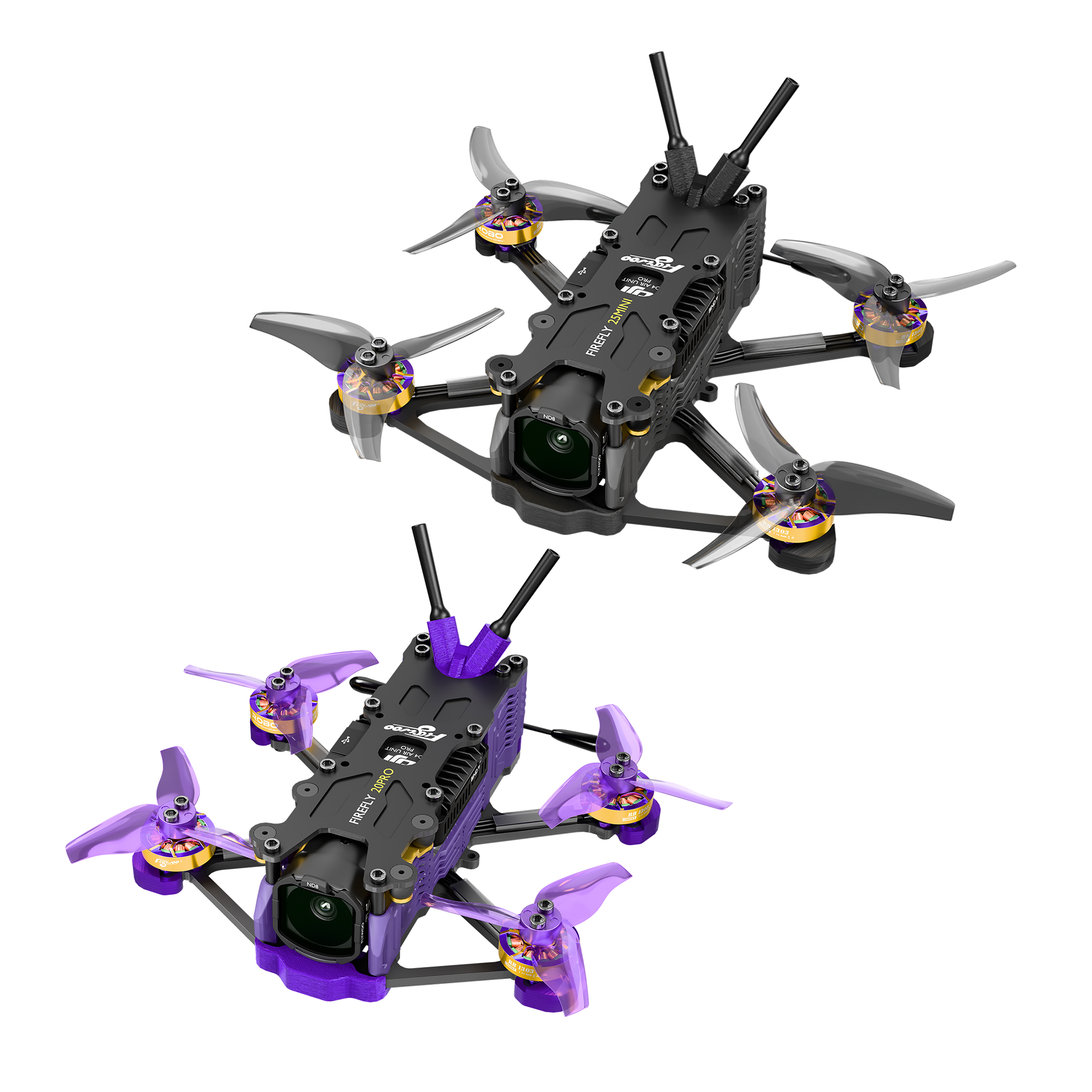
Micro freestyle Better as a second drone Outdoor parks, freestyle spots, cinematic lines More speed, more power, sharper control Open-frame power can punish beginner mistakes Firefly 20PRO / 25MINI O4 PRO
Sub-250g long range Best after basic practice Open landscapes, travel, calm cruising Long flight time, GPS rescue, efficient cruising Requires regulation awareness, failsafe setup and battery planning Explorer LR 4 O4 WIDE
Why O4 changes the choice

DJI O4 gives beginners HD image quality, but the aircraft still needs to be easy to manage.

DJI O4 brings digital FPV video, onboard recording and modern camera quality into very small drones. Third-party FPV reviewers often separate camera quality from beginner handling, because a small HD drone still needs the right frame, battery, damping and prop protection to feel manageable for a new pilot.

Video system load

A DJI O4 micro drone is not just a frame with motors. It carries the camera, video transmitter, antenna, wiring, mounting hardware and cooling considerations. A beginner frame should make that load feel predictable.

cameraVTXmounting

Close-range control

New pilots spend many packs learning throttle control, direction changes and landing. A stable aircraft that feels calm at low speed teaches more than a fast aircraft that creates panic.

throttle controllow speed

Repair confidence

Beginners will bump walls, grass, gates and furniture. Prop guards, low mass and simple batteries reduce the emotional cost of practice, which keeps pilots flying instead of hesitating.

practicerepair

Reviewer note: use third-party reviews to judge the flying behavior, not only the camera system. Oscar Liang's beginner FPV guide and Flywoo model reviews are useful for separating "good video quality" from "easy first-drone handling."

Best first choice

A DJI O4 whoop is the best beginner FPV drone when safety and practice matter most.

A whoop is a small FPV drone with ducts or prop guards around the propellers. That makes it the most forgiving DJI O4 category for close-range practice. It is not crash-proof, but it is much easier to learn around small obstacles than an open-prop freestyle drone.

Why it fits beginners

Prop guards reduce the risk of light bumps becoming broken props or damaged surroundings. For indoor practice, family filming, backyard lines and travel clips, that protection matters more than top speed.

Which size to choose

Choose Flylens 75 when you fly in tighter rooms or want the most compact protected O4 whoop. Choose Flylens 85 when you want a calmer platform for larger indoor spaces, backyards and small parks.

What not to expect

A whoop is not the best choice for high-speed freestyle, long-distance cruising or maximum flight time. It is the best choice for learning smooth control without turning every mistake into a bigger repair.

Lightest option

A DJI O4 toothpick is best for beginners who value tiny size and open-space flying.

A toothpick-style FPV drone is an ultra-light open-prop micro quad. It can be simple, efficient and fun, but it is less protected than a whoop. That makes it better for careful beginners who have more open space and want the lightest DJI O4 aircraft possible.

Why 1S feels approachable

Flywoo Firefly 16 and Firefly 18 Nano Baby use a 1S battery direction, which keeps the setup small and easy to pack. The Firefly 16 is listed at 38.9 g without battery, while Firefly 18 is listed around 39 g without battery.

Where it works

Use a toothpick for open indoor halls, calm outdoor cruising, light backyard flying and ultra-portable daily practice. It is especially attractive when you want O4 digital FPV in the smallest possible bag.

Where it is harder

Open props need more care around people, pets, walls and furniture. If your first flying space is a living room or narrow hallway, start with a whoop instead.

Endurance path

A sub-250g long-range FPV drone is beginner-friendly only after you learn the basics.

Long-range FPV can look calm because the flying style is smooth and efficient. The hidden difficulty is planning. A long-range pilot must understand GPS rescue, return-to-home behavior, wind, battery sag, radio link quality, video link quality and local rules before flying far away.

Why Explorer LR 4 is attractive

Flywoo Explorer LR 4 O4 WIDE is listed at 154 g without battery, with M10 GPS rescue and up to 25-30 minutes on a 4S Li-Ion 18650 pack. That makes it a strong sub-250g cruising platform for travel-style FPV.

Why it is not a crash trainer

Long-range drones should not be used to learn basic stick control near obstacles. The goal is smooth cruising, navigation and safe return, not repeated bumps while learning orientation.

Regulation reminder

Drone rules vary by country, aircraft weight, flight purpose and location. Long-range beginners should check current local rules before flying, especially when flying near people, roads, buildings, parks, airports or controlled airspace.

Third-party reviewer notes

Use FPV blogger and reviewer content to judge how beginner-friendly each platform really feels.

Specs explain weight, battery and camera system. Third-party reviewers help with the harder beginner question: does the drone feel calm, durable, easy to recover and practical in the space where a new pilot will actually practice?

Third-party reference What it helps judge How it supports this guide
Oscar Liang FPV drone beginner guide General beginner FPV learning path, setup priorities and first-drone tradeoffs. Supports the article's position that beginners should prioritize control, repair confidence and practice environment before speed.
Oscar Liang Flywoo Flylens 85 review How an 85 mm protected Flylens-style platform behaves as a compact HD cinematic whoop. Supports Flylens 85 as the roomier beginner option for backyard, small-park and mixed indoor/outdoor flying.
Oscar Liang Flywoo Explorer LR review Long-range micro FPV platform behavior, endurance expectations and the kind of planning long range requires. Supports treating Explorer LR 4 as a beginner-adjacent cruising step, not a close-range crash trainer.
Oscar Liang Explorer LR4 O4 Pro review O4 Pro long-range update context, aircraft configuration and image-system tradeoffs on a small LR frame. Supports the guide's advice that long-range O4 is attractive, but needs more setup awareness than a first whoop.
Flight Club Reviews Flylens 85 video Real flight behavior of a larger Flylens platform in cinematic micro FPV conditions. Supports using Flylens 85 when the beginner expects more open space, smoother lines and outdoor clips.

How to read reviews: do not copy an experienced pilot's flight style on day one. Watch for space requirements, takeoff behavior, low-speed control, recovery after turns, prop protection and how often the reviewer mentions setup details.

Flywoo model picks

Choose the Flywoo DJI O4 beginner model by your first flying space.

The cleanest beginner decision is not "which drone is best overall?" It is "where will I fly most often during my first 30 battery packs?" Match the aircraft to that answer.

Beginner profile Recommended model Product data from Flywoo lineup Why it fits Link
Apartment / tight indoor learner Flylens 75 O4 WIDE or O4 PRO 75 mm ducted whoop, 64.2-75.3 g without battery, 2S 550-1000 mAh, about 3-6 min depending version Most compact protected DJI O4 whoop choice for close-range practice View Flylens 75 O4
Mixed indoor / backyard beginner Flylens 85 O4 WIDE or O4 PRO 85 mm ducted whoop, 75.3-87.5 g without battery, 2S 750-1000 mAh, about 3-8 min depending version Roomier whoop feel, calmer outdoor lines and more space around the O4 system View Flylens 85 O4
Smallest digital FPV kit Firefly 16 1S Nano Baby O4 88.5 mm 1.8-inch toothpick, 38.9 g without battery, 1S 450-750 mAh, about 3.5-6.5 min Flywoo's lightest DJI O4 drone in the 2026 lineup View Firefly 16
Light outdoor cruising Firefly 18 1S Nano Baby O4 89 mm 1.8-inch toothpick, about 39 g without battery, 1S 450-1000 mAh, about 4-8 min Slightly roomier toothpick direction for ultra-portable outdoor flying View Firefly 18
Beginner moving into cruising Explorer LR 4 O4 WIDE 170 mm 4-inch long-range platform, 154 g without battery, M10 GPS rescue, about 25-30 min on 4S Li-Ion 18650 Best Flywoo beginner-adjacent choice when the goal is endurance, not close-range crash practice View Explorer LR 4
Second-drone category

Micro freestyle drones are exciting, but they are not the calmest first DJI O4 choice.

Flywoo Firefly 20PRO 4S and Firefly 25MINI 3S are excellent for compact cinematic freestyle, but they make more sense once you can already take off, hover, turn, recover and land comfortably. Open-frame power is fun after you have basic control.

Firefly 20PRO 4S

The Firefly 20PRO 4S direction is compact and punchy. It is listed as a 105 mm 2-inch open-frame micro freestyle platform, with 4S batteries and about 5-7.5 minutes depending O4 version. It is better for pilots ready for sharper outdoor flying.

View Firefly 20PRO O4 PRO

Firefly 25MINI 3S

The Firefly 25MINI 3S direction is smoother and longer flying than the 2-inch power-focused path. It is listed as a 122 mm 2.5-inch open-frame micro with about 8-14 minutes depending O4 version, making it a strong next step for outdoor cinematic FPV.

View Firefly 25MINI O4 WIDE

Video references

Watch the protected whoop platforms before choosing your first DJI O4 FPV drone.

Video is useful when it shows platform behavior, not just a highlight reel. Use these Flylens examples to compare how the smaller 75 mm and roomier 85 mm protected whoop directions feel in real flight.

Flylens 75 platform video

Use this video to understand the smaller Flylens footprint: tighter ducts, compact movement and a more travel-friendly protected whoop feel. It is the better size direction for tight rooms and small-space practice.

Watch Flylens 75 video

Flylens 85 O4 Pro video

Use this video to understand the larger Flylens direction: more room around the O4 system, steadier cruising and a calmer feel for larger indoor areas, backyards and small parks.

Watch Flylens 85 O4 Pro video

Additional Flylens 85 flight context

This additional Flylens 85 video helps beginners see how a protected whoop behaves outside slow indoor lines. The useful takeaway is not that every beginner should fly fast. It is that a roomier whoop can feel more settled in open backyard and park spaces.

Watch additional Flylens 85 video

Beginner checklist

Before buying your first DJI O4 FPV drone, answer these six questions.

A good beginner setup is the one you can safely practice with every week. Use this checklist to avoid buying too much aircraft too early.

1. Where will you fly first?

Small room or apartment: Flylens 75. Larger indoor or backyard: Flylens 85. Open outdoor space: Firefly 16 / 18. Travel cruising: Explorer LR 4 after practice.

2. Do you need prop protection?

If you will fly near furniture, gates, walls or people, start with a whoop. If you have open space and can maintain distance, a toothpick can make sense.

3. How much battery complexity is okay?

1S is simple and light. 2S gives protected whoops more usable headroom. 3S and 4S are better once you understand charging, voltage sag and takeoff weight.

4. Are you learning or filming?

If you are mainly learning, prioritize protection and repair confidence. If you are mainly filming, prioritize smoothness, camera version and the space needed for stable lines.

5. Do you understand failsafe behavior?

Before long-range flying, learn what your radio link, video link, GPS rescue and return behavior do. Never treat GPS as a substitute for planning.

6. Are your goggles and radio compatible?

Confirm DJI O4 goggle compatibility and your radio receiver option before checkout. Flywoo's 2026 O4 lineup is presented with ELRS 2.4G by default in the lineup guide.

Final verdict

The best DJI O4 FPV drone for beginners is the one that makes practice feel repeatable.

For most pilots, start with a Flylens 75 or Flylens 85 whoop because protected props, low-speed control and close-range confidence matter more than speed. Choose Firefly 16 or Firefly 18 Nano Baby if your priority is the smallest 1S DJI O4 aircraft and you have open space. Choose Explorer LR 4 when you are ready for sub-250g cruising, GPS rescue and longer flight planning.

FAQ

Beginner DJI O4 FPV drone questions

What is the best DJI O4 FPV drone for beginners?

For most beginners, the best DJI O4 FPV drone is a ducted whoop. Prop guards make close-range practice more forgiving, and the aircraft feels less intimidating while learning throttle, turns and landings. In Flywoo's lineup, Flylens 75 is the compact indoor choice and Flylens 85 is the roomier mixed-space choice.

Should beginners choose a whoop, toothpick, or long-range FPV drone?

Choose a whoop if you want the safest path for indoor and backyard practice. Choose a toothpick if you want the lightest digital FPV setup and have open space. Choose long range only after learning basic control, battery behavior, failsafe setup and local flight rules.

Is a DJI O4 toothpick good for beginners?

A DJI O4 toothpick can be good for careful beginners who want an ultra-light aircraft and simple 1S batteries. It is less protected than a whoop, so it is better for open areas than for close indoor flying near furniture, people or pets.

Is long-range FPV good for a first drone?

Long-range FPV is usually not the best first drone category. It requires more planning around GPS rescue, return-to-home behavior, battery sag, wind, radio link and regulations. A model like Explorer LR 4 can be a strong beginner-adjacent second step after close-range practice.

Which Flywoo DJI O4 drone is easiest to start with?

Flylens 75 O4 is easiest for tight indoor practice. Flylens 85 O4 is easier for mixed indoor, backyard and small park flying. Firefly 16 and Firefly 18 are lighter but open-prop, so they need more space and more care around people and objects.

Should a beginner buy O4 PRO or O4 WIDE?

Choose O4 WIDE when cost, flight time and immersive POV matter most. Choose O4 PRO when onboard image quality and camera performance matter more. For a first practice drone, frame type and flying space usually matter more than camera version.

Can I fly a DJI O4 whoop indoors around kids or pets?

A ducted whoop is safer than an open-prop drone, but it is still a flying aircraft with spinning propellers. Fly slowly, keep distance, use prop guards, avoid faces and hands, and do not treat any FPV drone as harmless around kids or pets.

Third-party references

Independent reviews and blogger references used for this beginner guide.

/ /

Best DJI O4 FPV Drone for Beginners: Whoop, Toothpick, or Long Range?

Jun 22,2026 | FLYWOO