1. Where you fly
Indoor practice, park freestyle, and open-terrain cruising all point to different airframes.
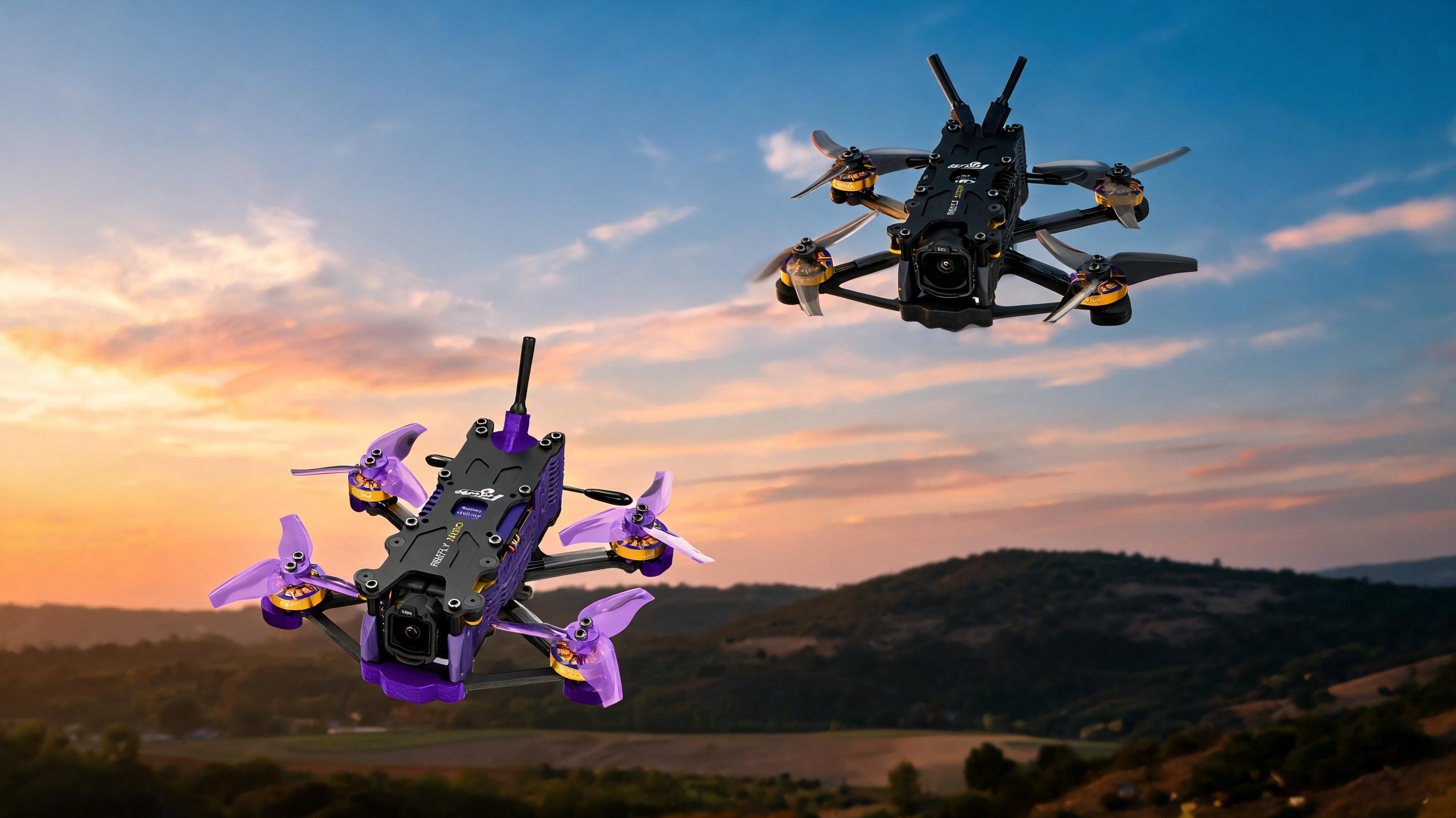
Start with where you fly. Choose a tiny whoop for indoors, a 2-inch to 2.5-inch micro for parks, or a sub-250 long-range build for open terrain. Then match the battery class to the flight style and the video system to your goggles. Check the selected variant before ordering because a radio, goggles, battery, or charger may not be included.
You have forty browser tabs open, every one of them a "best micro FPV drone" ranking, and they all recommend different quads for reasons nobody explains. Here is the short version: choosing a micro FPV drone comes down to three decisions made in order. First, pick your weight class based on where you fly (indoors, parks, or open terrain). Second, pick your battery cell count based on how you want it to fly. Cell count, not prop size, is what separates a gentle cruiser from a 120 km/h freestyle machine. Third, pick your video system based on the goggles you own or plan to buy. Get those three right and the brand-versus-brand question mostly answers itself. The rest of this guide explains the mechanics behind each decision, with real flight data from spec sheets instead of vague adjectives, so you can read any product page and know exactly what you're looking at.
Indoor practice, park freestyle, and open-terrain cruising all point to different airframes.
Battery cell count changes throttle headroom, flight time, and how quickly the quad climbs out of trouble.
DJI, Walksnail, HDZero, and analog each lock you into a matching video ecosystem.
The FPV community usually separates small quads by where they belong. Tiny whoops are ducted, low-mass indoor trainers. A 2-inch to 2.5-inch micro FPV drone has enough power for parks and backyards, while sub-250 long-range builds stretch toward open terrain and mountain trails.
| Class | Prop size | Typical battery | Weight range | Where it shines |
|---|---|---|---|---|
| Micro drone | 2"–2.5" | 2S–4S | 100–250 g with pack | Parks, backyards, freestyle |
| Sub-250 long range | 3.5"–4" | 4S–6S | just under 250 g | Open terrain, mountain trails |
A listing like 1S, 2S, 3S, or 4S tells you how much voltage headroom the quad has. More cells usually mean stronger punch-outs and higher top speed; fewer cells usually mean lower weight, smoother throttle, and easier indoor control. Start with the flight style, then pick the cell count that supports it.
Buy for your fourth week of flying, not only your first day. If the goal is smooth footage, a 3S endurance profile usually feels calmer and flies longer. If the goal is freestyle, dives, and fast recoveries, 4S headroom keeps the quad interesting after the beginner phase.
Your video system decides what you see in the goggles and what footage you take home. DJI, Walksnail, HDZero, and analog are separate ecosystems, so goggles and air unit must match. If you already own goggles, that choice is mostly made; if you are starting fresh, choose latency, image quality, and budget in that order.
Strength: Lowest-latency digital
Trade-off: Modest image quality, no high-res onboard recording
Latency matters more to you than footage
Strength: Good HD image at mid price
Trade-off: Smaller goggle ecosystem
You want digital HD without DJI pricing
Strength: Best image and onboard recording
Trade-off: Heaviest and most expensive
Footage quality is the point
Indoors → tiny whoop. Parks and backyards → 2"–2.5" micro. Open hillsides → sub-250 long range.
Cinematic minutes → 3S endurance profile. Acrobatics and speed → 4S headroom. Both → a swappable-frame system instead of two full quads.
Match the air unit to goggles you own. Starting fresh and footage matters → DJI O4 line. Starting fresh and racing → HDZero or analog.
Confirm batteries, receiver type, charger, and GPS on the product page. Budget for packs and a charger if they're not listed.
Look for plug-and-play electronics (no soldering for receiver, GPS, or video unit swaps) and confirm replacement frames and props are in stock. A micro drone you can repair in ten minutes gets flown; one waiting on a soldering iron gathers dust.
Choose the airframe by flight style first, then match the O4 / O4 Pro / O4 Wide path to the goggles and footage you want.
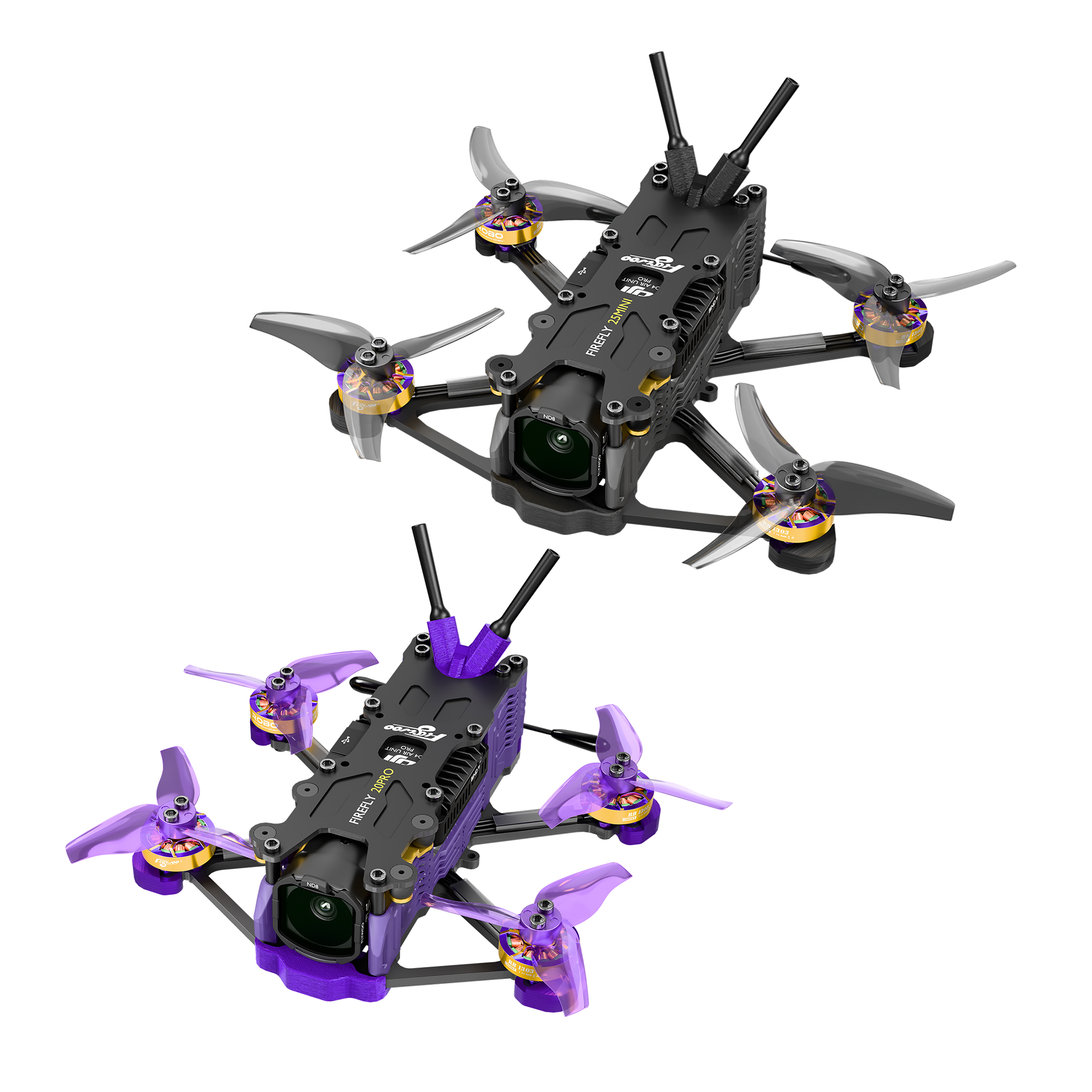
2-inch freestyle micro
4S headroom, low hover throttle, and DJI O4 Pro recording for pilots who want speed, punch-outs, and outdoor freestyle.
View product2.5-inch endurance micro
Longer, smoother 3S flights for cinematic lines, park cruising, and pilots who care more about minutes than top speed.
View productlighter wide-lens option
A lighter DJI O4 Wide path for pilots who want HD digital FPV without the extra weight and price of the Pro unit.
View productIf your shortlist has narrowed to our modular 2-inch and 2.5-inch O4 builds, this Firefly 20PRO vs 25MINI comparison explains the 4S freestyle and 3S endurance split in detail.
Rules depend on where you fly. In many regions, sub-250 g drones have fewer registration burdens, but pilots still need to follow local airspace, line-of-sight, and safety rules. Always check the final takeoff weight with battery installed.
Yes, especially if you start with a simulator or a 1S tiny whoop first. A 2-inch to 2.5-inch micro gives better outdoor control than a tiny whoop while still being cheaper and less intimidating than a full 5-inch freestyle quad.
A tiny whoop is a ducted indoor trainer, usually on 1S power. A micro FPV drone uses open 2-inch to 2.5-inch props and more voltage, so it handles wind, carries HD video systems, and flies more like a small outdoor quad.
Published flight time is usually measured in calm cruising conditions with the recommended battery. Hard throttle, wind, cold weather, heavier cameras, and worn packs can cut that number quickly, so compare flight styles as well as battery size.
Yes, if the drone has a compatible DJI air unit such as O4 or O4 Pro. DJI goggles do not connect to Walksnail, HDZero, or analog transmitters, so the air unit and goggles should be chosen as one system.
New to DJI O4 FPV? Use the FLYWOO beginner DJI O4 FPV drone guide to compare whoop, toothpick, freestyle micro and long-range starting points after you understand the micro drone framework.
Already know you want an outdoor DJI O4 micro or sub-250 build? Compare prop size, battery class, O4 Pro versus O4 Wide, and flight style in the FLYWOO DJI O4 FPV drone comparison before choosing the exact airframe.
If the cell-count decision still feels abstract, use the 1S, 2S, 3S, and 4S battery feel guide to compare throttle headroom, flight time, and beginner-friendly micro FPV setups before choosing a frame.
Jun 15,2026 | FLYWOO