Control and power
The GOKU F722 Pro Mini V2 45A Stack keeps the 4-inch platform compact while supporting the power needs of efficient long-range cruising.
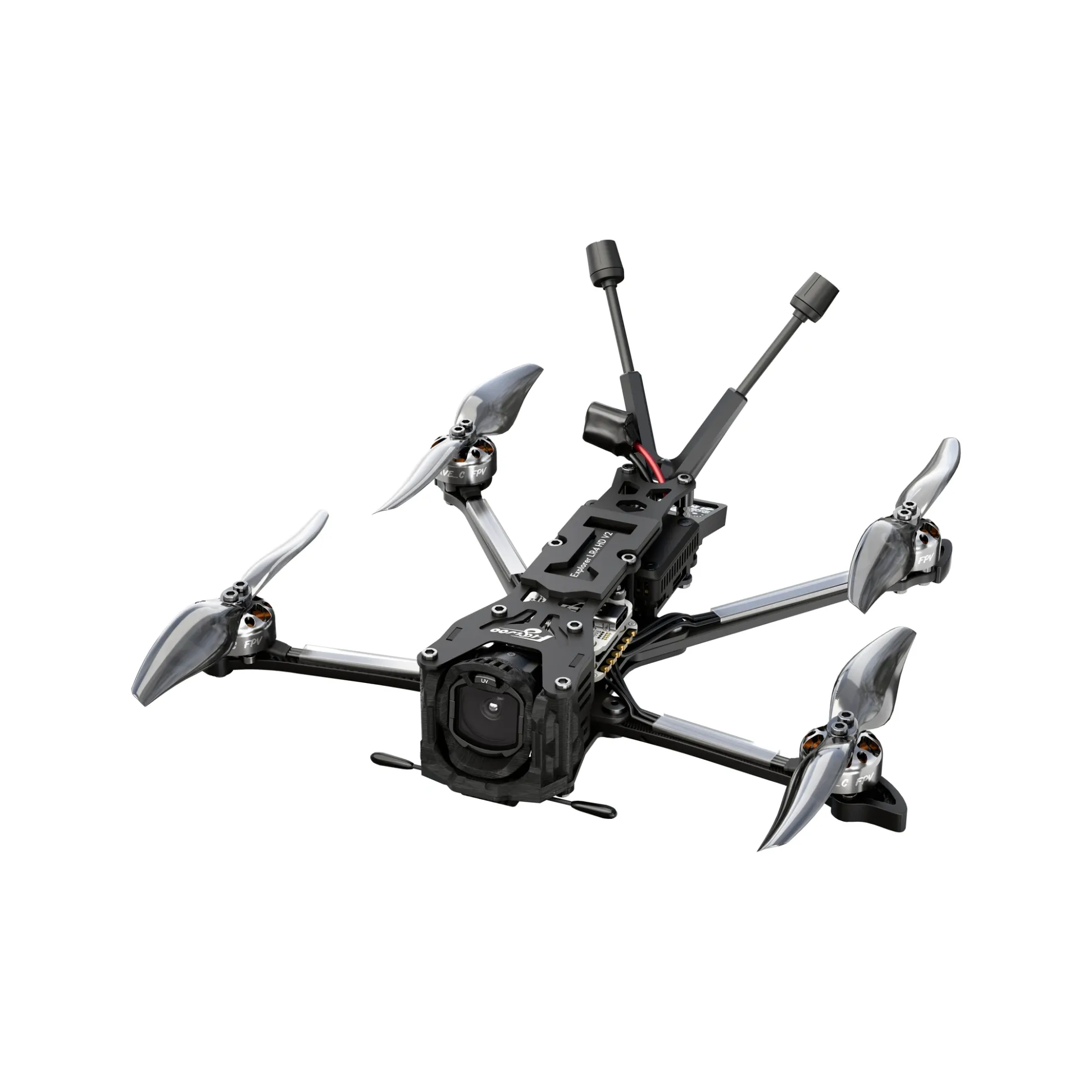
V2 is not a full platform reset. It keeps the 4-inch micro long-range idea and updates the camera damping mount for newer O4 Pro 1469D gyro batch adaptation.
The biggest difference is the V2 camera mount. The revised mount uses four custom damping balls for newer DJI O4 Pro Air Unit / DJI O4 Air Unit batches with the 1469D gyro context. If your V1 already flies cleanly, the core LR4 experience remains familiar: light 4-inch cruising, GPS-assisted open-area flight, recovery-buzzer support, and compact travel footage.
Explorer LR 4 V2 O4 PRO combines DJI O4 Pro imaging, a revised camera damping mount, GPS support, and a lightweight 4S battery setup for open-area long-range flights.
The GOKU F722 Pro Mini V2 45A Stack keeps the 4-inch platform compact while supporting the power needs of efficient long-range cruising.
The LR 4 setup includes GPS support for planned open-area flights and FLYWOO Finder recovery support for easier locating after a battery disconnect or low-visibility landing.
Use the FLYWOO 4S 750mAh battery for the approx. 246g sub-250 setup, or choose compatible Explorer 4S LiHV and 18650 packs when longer cruising time matters more than takeoff weight.
For buyers, V2 is easy to understand: the Explorer LR 4 mission stays the same, while the O4 Pro camera damping structure is updated for the 1469D gyro adaptation. The airframe weight moves only slightly, from about 178g to about 179g, and the LR 4 platform keeps the same focus on efficient cruising, GPS support, and recovery-buzzer support.
Choose V2 when your priority is the updated camera damping mount. The four custom damping balls are the main hardware change for O4 Pro footage stability on newer 1469D gyro batches.
V2 mountO4 Pro1469D
Explorer LR 4 remains a light 4-inch micro long-range platform. The basic appeal is still efficient cruising, compact travel carry, GPS support, and DJI digital video without adding a separate action camera.
4-inch LRGPStravel footage
Use this table to focus on the differences that affect the buying decision: camera damping, 1469D gyro adaptation, weight, sub-250 setup, and upgrade path.
| Decision point | Explorer LR 4 O4 PRO V1 | Explorer LR 4 V2 O4 PRO | Buyer meaning |
|---|---|---|---|
| Main update | Original O4 Pro camera-mount generation. | Revised camera mount with four custom damping balls. | V2 is the stronger pick for buyers prioritizing smoother O4 Pro footage on newer O4 batches. |
| 1469D gyro context | V1 was not designed around this specific V2 damping update. | The V2 mount is designed for newer DJI O4 Pro / O4 Air Unit batches with the 1469D gyro context. | This is the clearest reason to choose V2 when buying a new LR 4 O4 PRO setup. |
| Weight without battery | Approx. 178g. | Approx. 179g. | The airframe weight is similar; V2 does not turn LR4 into a heavier class by itself. |
| Sub-250 setup | Sub-250 capable with the FLYWOO 4S 750mAh battery setup. | Approx. 246g with the FLYWOO 4S 750mAh battery. | Always weigh the real takeoff setup, especially with filters, straps, side plates, or accessories. |
| Upgrade path | Existing V1 owners can keep flying if the footage is stable. | V1 owners who want the V2 structure should plan around the V2 Frame Kit because most frame parts are different apart from the front and rear arms. | For V1 owners who want the V2 structure, plan the change as a frame-kit update rather than a small bracket swap. |
This is a small long-range cruiser, not a bashing quad. The best flights are the ones where low weight, efficient 4-inch props, GPS support, and DJI O4 Pro footage all matter at the same time.
Use LR4 for mountain roads, coastlines, valleys, and scenic pull-offs where you want a compact kit and smooth forward motion. Keep the route simple, keep a return margin, and avoid flying behind terrain.
The sub-250 750mAh setup fits trips where space and weight matter. It is useful for establishing shots, travel reels, and casual cinematic FPV without packing a larger long-range aircraft.
LR4 is a good platform for learning battery planning, GPS lock checks, home-point behavior, and return margin in safe open areas before attempting more committed long-range routes.
Open props, 4-inch size, and long-range tuning make it the wrong tool for living rooms, warehouses, or close indoor proximity practice.
The platform is built around efficiency and low weight. If the plan is repeated concrete hits, tree gaps, or hard acro training, choose a more durable freestyle frame.
Long range works best with clear space, predictable routes, and generous return margin. Avoid people-dense areas, busy roads, aircraft activity, heavy obstacles, and routes where signal or recovery would be difficult.
These flight videos help buyers understand the LR4 style: smooth open-area cruising, battery planning, and compact travel footage. Use the comparison above for V1 vs V2 hardware differences.
A flight session focused on LR4 O4 Pro cruising behavior, setup feel, and open-scene handling.
Lake and tree-line flying that matches the LR4's smooth-route use case and compact travel-drone positioning.
A closer look at the current V2 O4 PRO setup for buyers comparing the updated camera-mount structure and LR4 format.
Public creator testing around the LR4 O4 Pro platform is most useful for flight behavior, battery planning, GPS expectations, and real-world handling. The V2 decision still centers on the updated camera damping mount and 1469D gyro adaptation.
Oscar Liang's June 2025 LR4 O4 Pro review is useful for understanding the platform as a travel-focused sub-250 long-range drone. The review covers build quality, O4 Pro integration, flight performance, battery behavior, setup work, and practical limitations.
independent reviewLR4 O4 Pro
The review reports efficient cruising behavior around 50-60 km/h with different 4S battery choices, while also showing why takeoff weight changes quickly when moving from small LiHV packs to larger Li-ion packs.
battery planningcruising setup
Use creator flight testing to judge whether the LR4 style fits your flying: smooth lines, travel footage, and planned open-area routes. Choose V2 when the updated camera damping structure is important for a new O4 Pro build.
buying decisionV2 mount
If you are building or buying now, V2 is the cleaner choice because it brings the updated camera-mount structure while preserving the Explorer LR 4 mission.
You want the current camera damping structure, you are using a newer DJI O4 Pro/O4 Air Unit batch, you care about scenic footage stability, and you prefer a current factory setup instead of troubleshooting vibration later.
new buyerO4 Protravel LR
View Explorer LR 4 V2 O4 PROYou already own a V1, your footage is stable, and your flight style is efficient cruising. V1 can still make sense when price or existing parts matter. For new purchases, the V2 camera mount is the stronger reason to choose the newer version.
existing ownerstable footagevalue buy
View Explorer LR 4 O4 PRO V1Updated V2 camera damping, compact 4-inch long-range handling, DJI O4 Pro footage, GPS support, recovery buzzer support, and an approx. 246g setup with the FLYWOO 4S 750mAh battery.
It is not built for indoor flying, repeated crash-heavy freestyle, or routes where wind, obstacles, or RF conditions leave little return margin. Longer-endurance battery choices can also move the setup beyond a sub-250 takeoff weight.
Explorer LR 4 is designed as a compact long-range cruiser, so the best experience comes from matching the battery, takeoff weight, route, and camera setup to the flight you want to capture.
For the lightest V2 configuration, pair the drone with the FLYWOO 4S 750mAh battery and weigh the full takeoff setup before relying on a sub-250g build.
For longer scenic cruising, compatible Explorer 4S LiHV or 18650 packs can extend the flight plan, but they should be chosen with weight, voltage sag, wind, and return margin in mind.
Choose wide outdoor spaces with clean takeoff points, visible landmarks, predictable wind, and room to turn back early. The LR 4 feels most natural on smooth forward lines, gentle elevation changes, and scenic routes where efficiency matters more than aggressive stick movement.
Official product links support configuration details. Third-party review and video links add flight context, setup notes, and cruising impressions without replacing product specifications.
The main V2 change is the revised O4 Pro camera mount with four custom damping balls. This update is designed for newer DJI O4 Pro Air Unit and DJI O4 Air Unit batches with the 1469D gyro.
If your V1 footage is stable and you are happy with the setup, you do not need to replace the whole drone. V1 owners who want the V2 camera damping structure should plan around the V2 Frame Kit because most frame parts differ apart from the front and rear arms.
Yes. Explorer LR 4 V2 O4 PRO is about 246g takeoff weight with the FLYWOO 4S 750mAh battery. Always weigh your exact setup with propellers, straps, filters, and accessories before relying on a sub-250 setup.
Explorer LR 4 is better for efficient cruising, travel footage, and open-area scenic lines. It is not the right first choice for crash-heavy freestyle, tight indoor flying, or aggressive acro practice.
Typical Explorer LR 4 long-range flights are around 3-5 km under suitable conditions, while video-transmission specifications are not guaranteed flight distance. Real range depends on battery, wind, route planning, RF environment, return margin, and pilot setup.
Choose V2 for a new LR4 purchase. The platform remains a compact 4-inch long-range cruiser, and the revised camera damping mount is the meaningful update for newer O4 Pro/O4 Air Unit batch concerns.
Shop Explorer LR 4 V2 O4 PROTravel pilots, scenic FPV cruising, sub-250 750mAh setups, open-area GPS practice, and pilots who want DJI O4 Pro footage in a compact long-range build.
Skip it for indoor flying, repeated crashes, heavy freestyle training, or routes with heavy obstacles, poor recovery access, or too little return margin.
Jun 13,2026